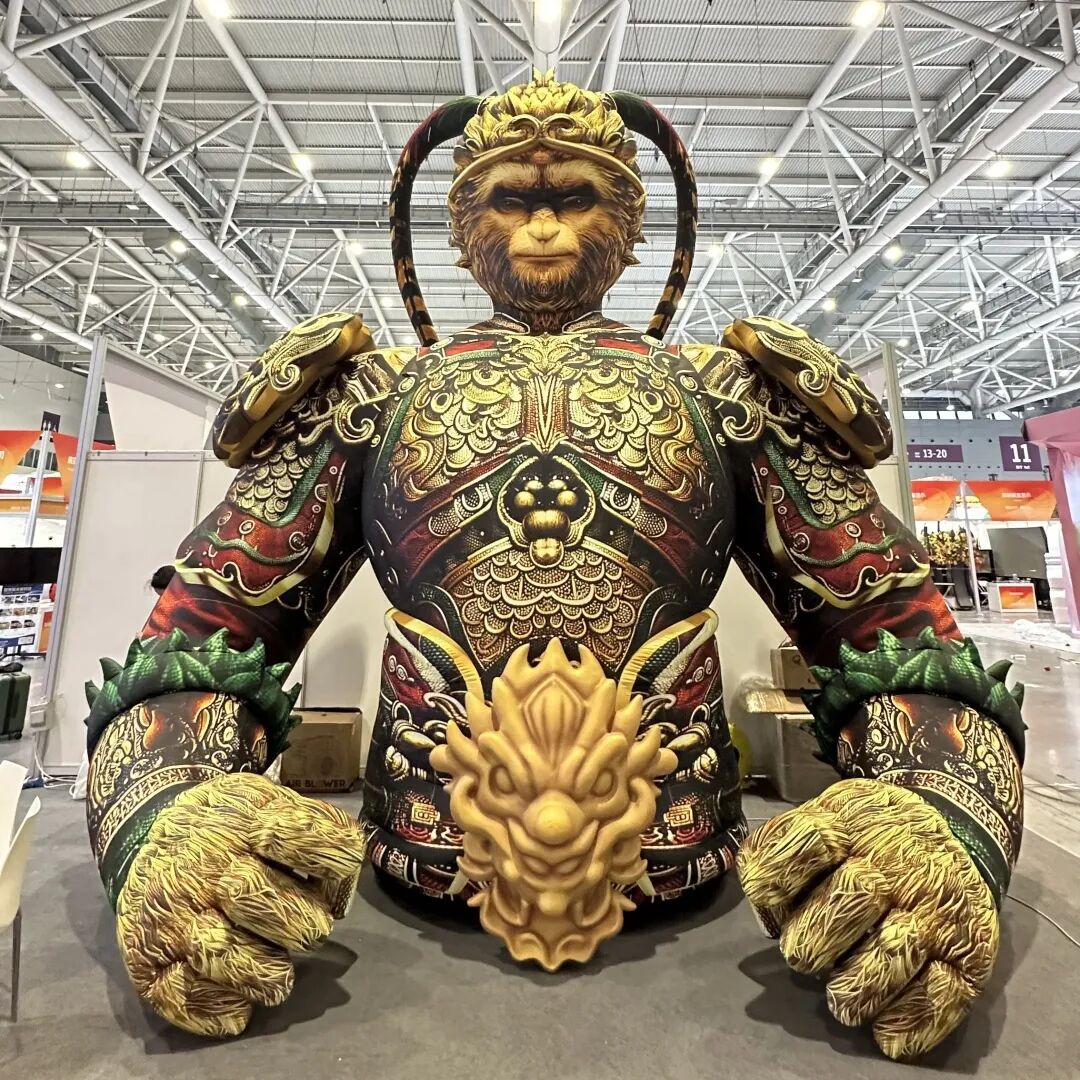
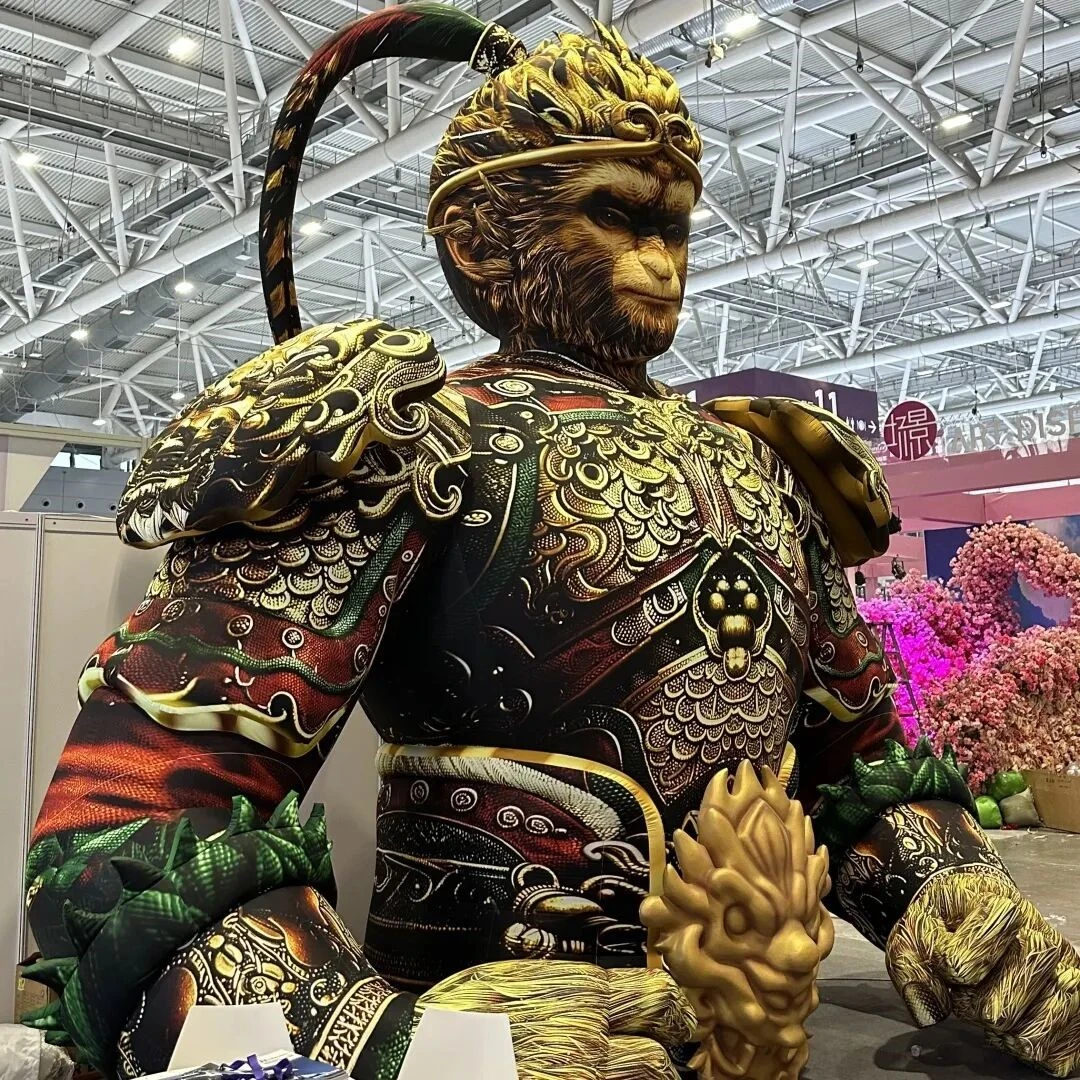
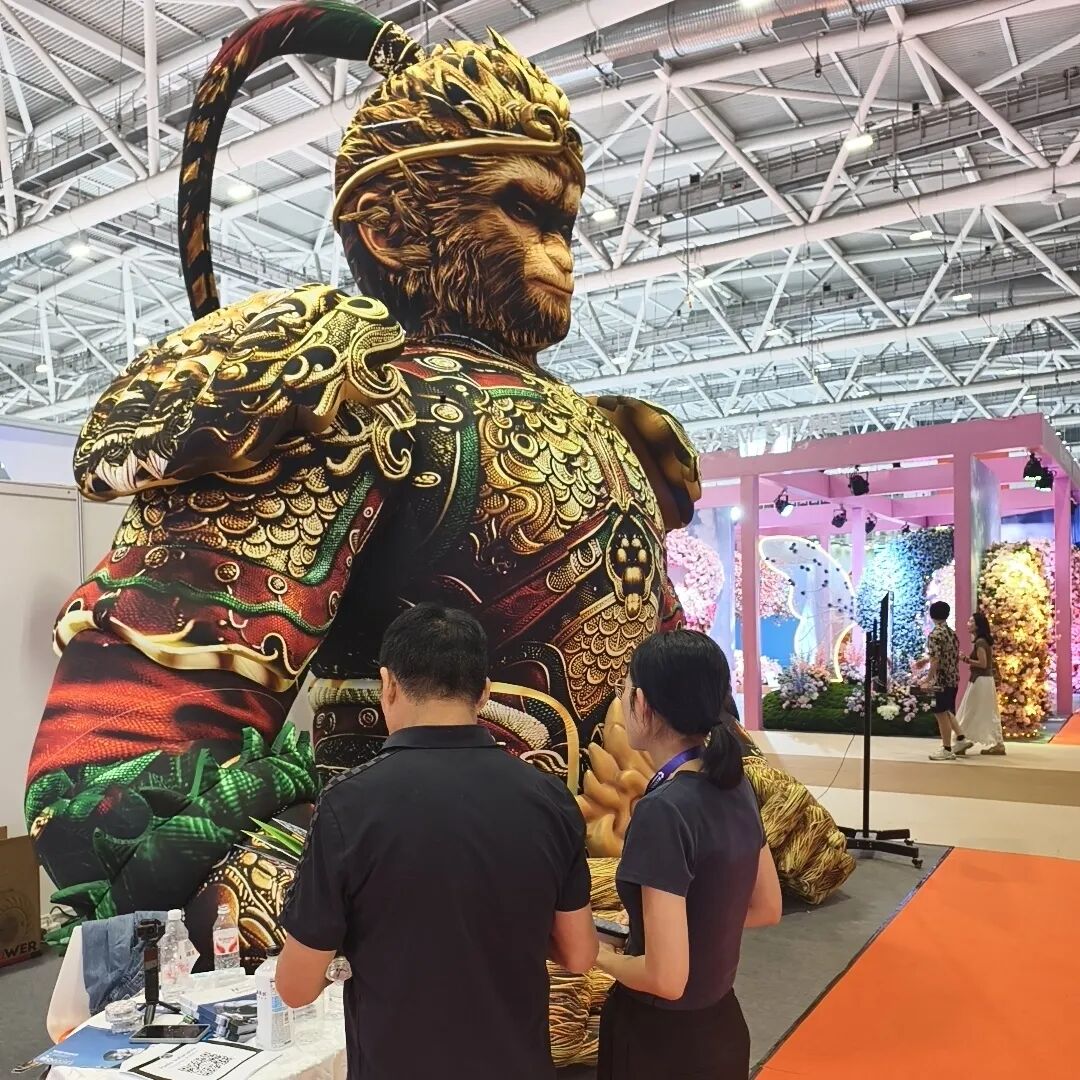
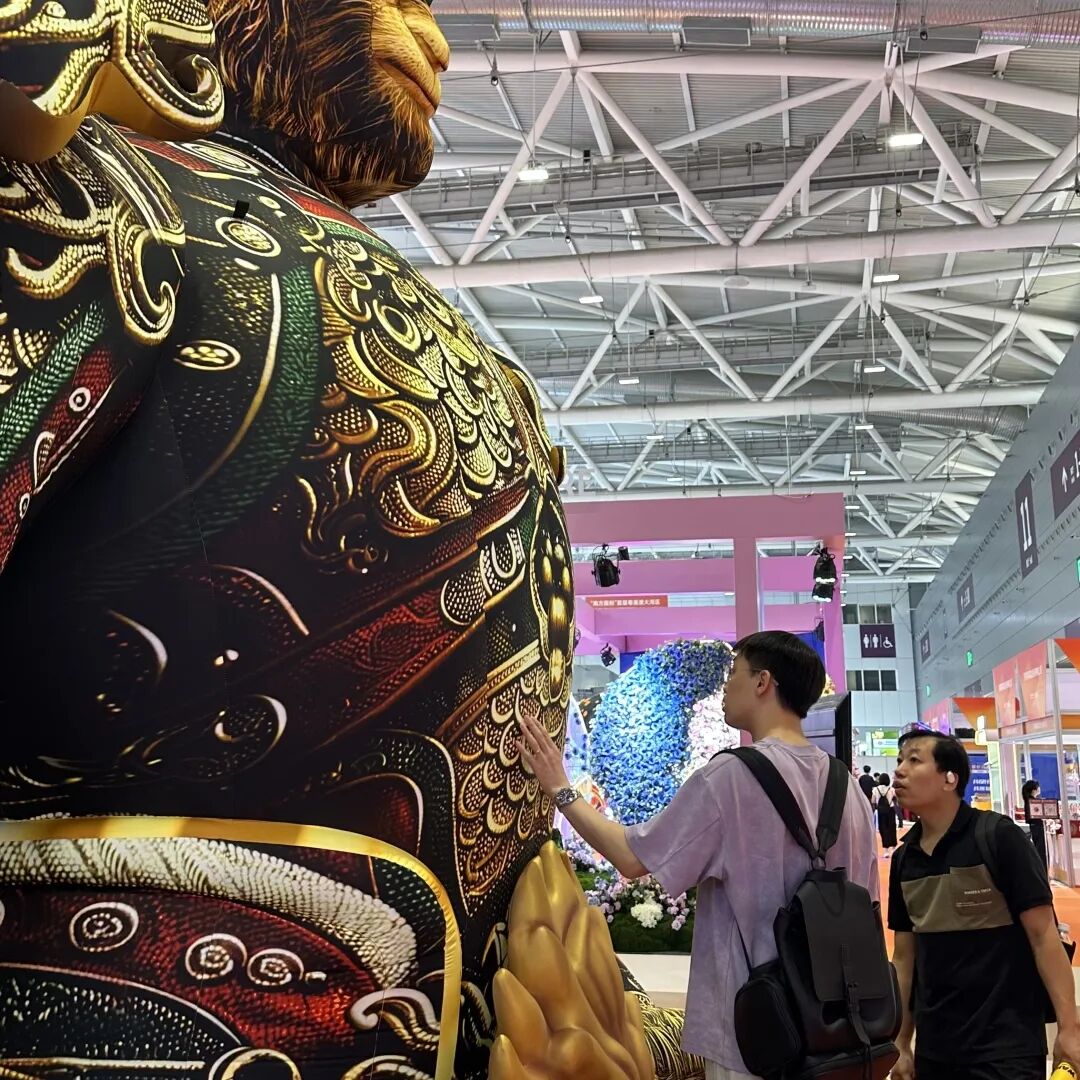
A giant Sun Wukong inflatable stood at the front of the visual merchandising expo in Shenzhen this October and stayed busy until the hall closed. Visitors stopped to photograph the armoured figure on their way past, ran a palm across the matte shell to feel how the fabric held its shape, and asked the staff on duty how a printed scale pattern survives several days of continuous inflation.
The figure was the centrepiece of the stand, and the questions it pulled in were mostly technical rather than commercial: which cloth, which printing method, how the flat surfaces were made to look three-dimensional. Three production decisions answered most of them.
Matte Stretch Fabric Holds The Silhouette
The body is built from a heavier grade of matte stretch cloth rather than standard oxford. Higher stretch means fewer creases once the figure is inflated, so shoulders, chest and forearms stay rounded instead of collapsing into folds. The matte finish also removes the plastic sheen that flattens detail on photographed inflatables, which is why the fur texture on the face and the weave on the armour still read at two or three metres in a phone snapshot.
Outdoor duty was part of the brief from the start: the same shell has to sit in a plaza or a scenic-area entrance for weeks without going chalky under UV.
Fluorescent Transfer Printing Adds Depth
Colour comes from fluorescent heat-transfer printing with dedicated fluorescent inks, not direct-to-fabric inkjet. The result is a denser, warmer palette, and the armour patterns hold their layering instead of muddying where the gold meets the deep red ground. Under UV lamps the shell glows on its own, which gave the figure a second look after the hall lighting dimmed during the evening programme.
3D-Printed Parts Where Flat Printing Stops
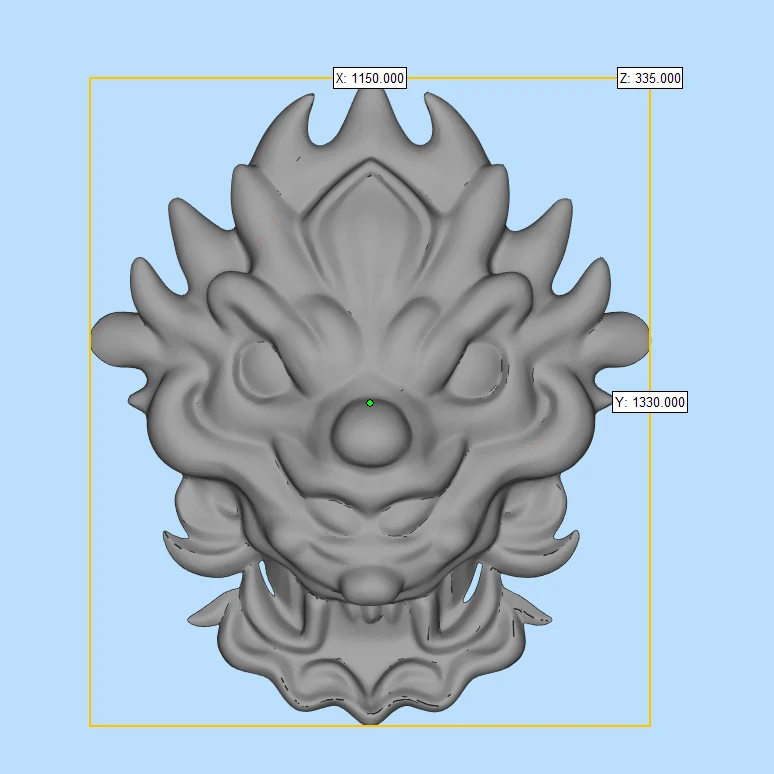
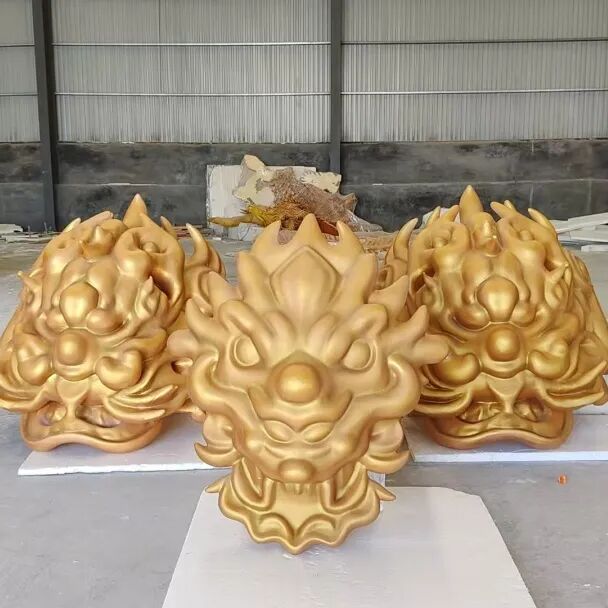
The chest badge is a 3D-printed component, not a printed image. It sits as a solid piece against the inflated body and carries a metallic armour finish, so the silhouette breaks the flat plane that gives most character inflatables away at close range.
Building a flat body and then adding solid parts is the part of the process that takes the most coordination between the modelling team and the sewing floor, because the printed badge and the fabric around it have to meet on the same seam line.
What Visitors Asked
Traffic at the stand peaked in the two hours after opening each day. Visitors were largely buyers from shopping mall marketing teams, scenic-area operators and event agencies, and the conversations ran through fabric selection, transfer process, custom artwork handling and on-site installation. Staff brought samples of the matte cloth and printed panels so buyers could compare weight and print density by hand rather than from a catalogue.
Requests clustered around three uses: seasonal displays in malls, entrance installations for cultural and scenic sites, and themed pavilions inside exhibitions. A recurring question was lead time for oversized figures, and whether a design already approved as artwork could be adjusted after a first inflation test.
In-House From Model To Inflation Test
Design, fabric selection, printing, sewing and the final inflation check all happen under one roof, which is what allows a figure of this detail level to be corrected late in the process. The Wukong build went through repeated 3D modelling passes before cutting: pose, curve radii and the mapping of the armour pattern onto curved panels were settled on screen, then checked piece by piece against the marked cutting sheets on the floor.
That workflow is what the company brings to larger IP inflatables and display installations for malls, scenic areas, themed exhibitions and pop-up events, where the figure has to look right from a distance and still reward a close look.